Speed and agility training in football has become one of the most essential components for modern players who want to perform at their peak. As the game evolves, athletes are expected to move faster, change direction quickly, and maintain explosive power throughout the match. Therefore, understanding how speed and agility work together can significantly improve a player’s overall performance. Whether you are a beginner, an intermediate player, or an advanced athlete preparing for professional trials, focusing on these two aspects can transform your game. In this guide, we will explore why speed and agility training in football matters, what drills players must include, and how they can build a sustainable workout routine that delivers long-term growth.
To begin with, speed in football is not just about running fast in a straight line. Instead, it involves acceleration, deceleration, and the ability to cover short distances with maximum efficiency. Football is a sport where decisions happen within seconds, so players must reach top speed quickly. Similarly, agility refers to the ability to change direction while maintaining balance and control. It means shifting the body effectively under pressure, avoiding opponents, and adapting to unpredictable movements on the field. When both speed and agility combine, a player becomes more dynamic, confident, and difficult to stop.
Moreover, incorporating speed and agility training in football is crucial because the modern game demands quick reactions. Whether defending a counterattack, making runs behind the backline, or pressing high up the pitch, players need sharp footwork and immediate responses. As a result, training programs today focus more on multidirectional movement rather than basic running. In addition, coaches now use data and performance analysis to track progress and adjust drills according to a player’s individual needs. This approach ensures that every athlete gets customized training for maximum improvement.
speed and agility training football
Why Speed and Agility Matter in Football
Football is a sport built on moments of intensity. For example, a striker needs acceleration to outrun a defender, while a midfielder requires agility to receive the ball under pressure and distribute it immediately. Likewise, defenders must turn quickly to track attackers or make clean tackles. Because of these dynamic moments, speed and agility training in football helps players respond quickly during both offensive and defensive phases. Furthermore, it enhances coordination, prevents injuries, and increases endurance by training muscles to move efficiently.
Another important point is that speed and agility boost confidence. When players know they can outrun opponents or change direction without losing momentum, they naturally take more initiative during matches. This confidence often leads to better decision-making, improved creativity, and stronger overall performance. Therefore, including these drills in a regular training routine benefits players mentally as well as physically.
speed and agility training football
Key Components of Speed and Agility Training Football
When designing a training program, athletes must understand the main components of speed and agility. First, acceleration training helps players reach maximum speed quickly. This includes sprint starts, short bursts, and explosive first steps. Second, deceleration training teaches how to slow down quickly without losing control. In football, stopping at the right time is just as important as running fast. Third, multidirectional movement training focuses on side steps, pivots, and diagonal movements that mimic real-game situations. Lastly, reaction training sharpens a player’s ability to respond immediately to visual or auditory cues, which is essential during unpredictable match scenarios.
speed and agility training football
Best Drills for Speed and Agility in Football
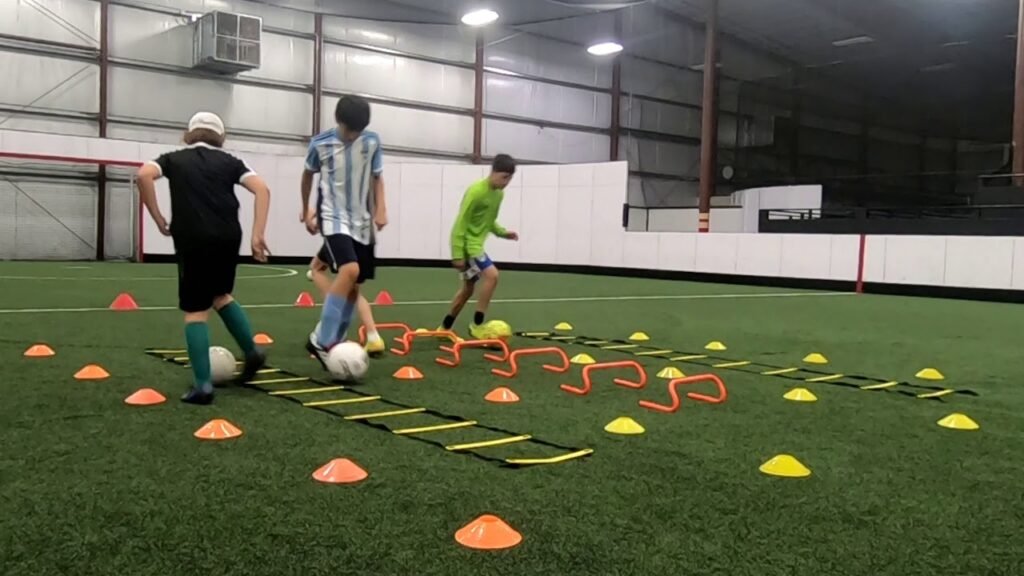
To get maximum benefits, players should practice drills that mirror actual match movements. One effective drill is the ladder footwork drill, which improves coordination and quick steps. Players move through the ladder using patterns such as two-feet-in, high knees, or lateral steps. Another essential drill is cone zig-zag sprinting, where athletes sprint diagonally between cones, improving both speed and direction changes. Additionally, short sprints between 10 to 20 meters help players practice quick acceleration, while shuttle runs enhance endurance and rapid transitions. Players should also include T-drills and Y-drills, which are great for improving agility by mixing forward sprints, lateral movement, and backpedaling.
Furthermore, plyometric exercises such as box jumps, bounding, and explosive lunges are useful for increasing strength and power. When combined with speed work, plyometrics help develop the explosive energy required during intense situations like sudden bursts, quick turns, and swift transitions. For better results, players should perform these drills at least three times a week with proper rest intervals to avoid muscle fatigue.
speed and agility training football
How to Structure a Training Session
A well-structured speed and agility training session in football begins with a dynamic warm-up. This warm-up includes jogging, stretching, hip mobility drills, and activation exercises to prepare the muscles. After the warm-up, players should start with acceleration drills, followed by agility work, and finally reaction-based exercises. It is important to keep each drill short and intense, as speed training requires maximum effort. Additionally, players must rest adequately between sprints to maintain quality performance.
As the session progresses, players can gradually shift toward more complex movements. For instance, combining sprinting with dribbling or integrating agility work into small-sided games helps develop real-time decision-making. This blend of technical and physical training ensures that athletes apply their speed and agility in match-like conditions. After completing the drills, players should end with a cool-down session to relax the muscles and reduce the risk of injury.
speed and agility training football
Common Mistakes in Speed and Agility Training Football
While training for speed and agility, many athletes make mistakes that slow down their progress. One common error is performing drills too fast without proper technique. Players must focus on form, balance, and body alignment rather than rushing through movements. Another mistake is ignoring strength training. Without strong muscles, especially in the legs and core, players cannot produce explosive power. Additionally, skipping warm-ups and cool-downs increases the risk of injuries, which can interrupt long-term development.
Another issue athletes face is training without rest. Speed and agility drills require high intensity, so the body needs time to recover. Overtraining can lead to muscle strain or fatigue, ultimately reducing performance. Therefore, players should follow a balanced routine that includes rest days and proper nutrition.
Benefits of Speed and Agility Training for Football Athletes
The benefits of speed and agility training in football are enormous. First, it enhances explosiveness, allowing players to accelerate faster and win more duels. Second, it improves agility, which helps athletes navigate tight spaces and maintain control during pressure situations. Third, consistent training strengthens muscles, boosts stamina, and increases overall athleticism. Furthermore, players with strong speed and agility can adapt quickly, dominate their position, and contribute effectively to the team.
speed and agility training football
Conclusion
In conclusion, speed and agility training football is essential for every player who wants to improve performance, stay competitive, and succeed in today’s fast-paced game. By incorporating specific drills, maintaining proper technique, and following a structured routine, athletes can significantly enhance their movement abilities. Moreover, regular training not only boosts physical performance but also builds confidence, decision-making, and overall game awareness. Therefore, players should prioritize these exercises and make them a fundamental part of their football development journey
Leave a Reply