Cricket is more than just a sport; it’s a passion, a tradition, and a unifying force across many nations. The History of cricket game is a fascinating journey that stretches over centuries, evolving from a simple village pastime into one of the most celebrated sports in the world. From the grassy fields of England to the bustling stadiums of India, Australia, and Pakistan, cricket has grown into a global phenomenon. This article explores the rich history of cricket, its origins, evolution, and how it became the heart of millions worldwide.
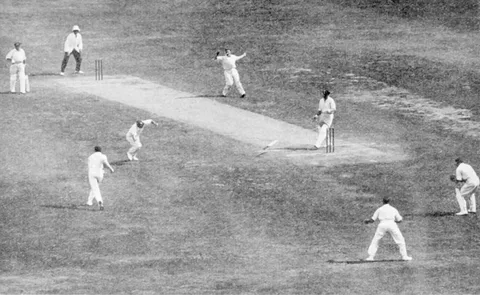
History of cricket game
The Origins of Cricket
The story of cricket begins in the 16th century, in the southeastern counties of England. Historians believe that the game was first played by children using a wooden stick and a small ball in open fields. The earliest definite reference to cricket dates back to 1598, when a court case in Guildford mentioned the game being played by schoolboys. Initially, it was considered a rural pastime, but by the 17th century, adults had embraced it as a competitive sport.
As time passed, cricket’s popularity spread across English villages. The game’s informal nature and simple equipment made it accessible to people of all classes. By the late 1600s, organized matches started taking place, often involving local communities or aristocrats sponsoring teams. This was the humble beginning of what would become one of the most followed sports globally.
Cricket in the 18th Century
The 18th century was a turning point in the history of cricket game. It was during this period that cricket began to take a structured form. The London Cricket Club, formed around 1700, played a vital role in promoting the sport. Soon after, the famous Marylebone Cricket Club (MCC) was established in 1787, and it became the governing body for cricket laws — a position it still holds today.
Cricket also started spreading beyond England. As the British Empire expanded, so did the game. British sailors, soldiers, and traders introduced cricket to their colonies, including India, the West Indies, South Africa, and Australia. This global spread laid the foundation for cricket’s international status.
One of the most significant milestones of this era was the formalization of the Laws of Cricket by the MCC in 1788. These laws standardized the dimensions of the pitch, the weight of the ball, and even the number of stumps used. The evolution of equipment also began during this period — bats became more refined, and protective gear slowly started developing.
History of cricket game
Cricket in the 19th Century
The 19th century witnessed a massive transformation in cricket’s organization and reach. The invention of the railway system in England allowed teams and fans to travel across the country, enabling more competitive matches. Cricket clubs flourished, and first-class cricket emerged as a recognized standard of play.
During this period, international cricket was born. The first-ever official Test match was played in 1877 between England and Australia at the Melbourne Cricket Ground. This match marked the beginning of a new era and established a rivalry that continues to define the sport — the legendary Ashes Series.
Cricket also became deeply rooted in colonial countries. India’s first cricket club, the Calcutta Cricket Club, was established in 1792. By the mid-1800s, cricket was played in schools, universities, and public grounds across the Indian subcontinent. It soon became more than a game — it became part of the cultural fabric.
The 20th Century: Cricket’s Global Expansion
The 20th century turned cricket into a global spectacle. More countries began participating in international matches, and cricket boards were established in nations like India (1928), South Africa, New Zealand, and the West Indies. The formation of the International Cricket Council (ICC) in 1909, initially known as the Imperial Cricket Conference, formalized international governance.
Test cricket remained the dominant format for many decades, but the introduction of limited-overs cricket in the 1960s changed everything. In 1971, the first-ever One Day International (ODI) was played between England and Australia. The shorter format attracted new audiences, making cricket faster, more exciting, and television-friendly.
The Cricket World Cup, first held in 1975, became one of the biggest sporting events in the world. The West Indies dominated the early years, while India’s stunning 1983 World Cup victory under Kapil Dev inspired millions across Asia. From that moment, cricket became not just a sport but a symbol of national pride and unity.
The late 20th century also saw the rise of cricketing legends like Sachin Tendulkar, Brian Lara, Wasim Akram, and Shane Warne, who took the game to new heights. Their performances drew huge crowds and inspired generations of players worldwide.
History of cricket game
The Modern Era of Cricket
As the 21st century began, cricket underwent yet another transformation with the introduction of Twenty20 (T20) format in 2003. The T20 format revolutionized the sport with its high-energy, fast-paced gameplay designed for modern audiences. It brought cricket to the younger generation and increased global viewership dramatically.
The launch of the Indian Premier League (IPL) in 2008 changed cricket forever. Combining entertainment, glamour, and world-class competition, the IPL became one of the most watched sporting leagues globally. Following its success, several other domestic T20 leagues emerged in countries like Australia (Big Bash League) and Pakistan (PSL).
Technology also became an integral part of modern cricket. Innovations like Decision Review System (DRS), Hawk-Eye, and Snickometer enhanced fairness and accuracy. Social media platforms gave fans direct access to players, turning cricket into a digital and interactive experience.
Women’s cricket also gained remarkable attention in recent years. The growth of tournaments like the ICC Women’s World Cup and Women’s Premier League (WPL) has proven that cricket is truly a game for everyone.
Cricket’s Cultural Impact
Cricket has always been more than just a sport; it’s an emotion that connects billions. In countries like India, Pakistan, England, and Australia, cricket is almost a religion. The game has inspired films, literature, and music. It has bridged political and cultural divides, often serving as a medium of diplomacy between nations.
The values cricket teaches — teamwork, patience, respect, and discipline — have made it a beloved game across generations. Whether played in a professional stadium or on a dusty street, cricket unites people from every walk of life.
History of cricket game
Conclusion
The history of cricket game is a remarkable story of evolution, resilience, and passion. From its humble beginnings in English villages to the grand stadiums hosting world cups, cricket has continued to inspire and entertain. Each era has added something new to the game — from the timeless charm of Test cricket to the electrifying energy of T20 matches.
Cricket’s journey is far from over. With technology, inclusivity, and global expansion driving its future, the spirit of cricket continues to grow stronger. It remains a timeless reminder that sports can unite nations, inspire dreams, and create history — one match at a time.
Leave a Reply